Dan Bongino
Conservative Radio Host and Media Entrepreneur
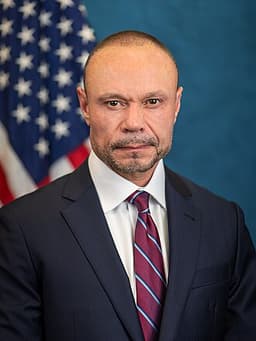
Dan Bongino is a former Secret Service agent who became a prominent conservative radio host, podcaster, and media entrepreneur. He has run several times for Congress as a Republican, worked as a Fox News contributor, and built a significant independent media presence with a top-rated podcast and radio show. He is also an investor in Rumble, an alternative video platform he frequently promotes to his audience as a free-speech alternative to YouTube.
Bongino was an active promoter of claims that the 2020 presidential election was stolen, using his radio and podcast platforms to amplify theories about voting machine manipulation and ballot fraud. Election officials in contested states, federal courts, and the Department of Homeland Security's Cybersecurity and Infrastructure Security Agency all concluded that no evidence supported widespread fraud affecting the election's outcome. Bongino continued promoting these claims after the legal challenges failed. His supporters argue he was raising legitimate questions about election integrity; critics say he was spreading misinformation that undermined public trust in democratic processes.
His financial stake in Rumble created a conflict of interest that critics noted was not always clearly disclosed to his audience. Bongino promoted Rumble extensively while having a direct financial benefit from its growth — a situation where commercial interest and editorial advocacy aligned in ways his audience may not have fully understood. YouTube permanently banned Bongino's channel in January 2022 for repeated violations of its COVID-19 misinformation policies, after multiple prior warnings. Bongino moved his video content to Rumble and characterized the ban as politically motivated censorship.
During the pandemic, Bongino used his platform to question the efficacy of vaccines and masks and to promote claims about public health measures that fact-checkers found to be inaccurate. He was diagnosed with lymphoma in 2020 and underwent treatment; he has said his personal medical experiences informed some of his health-related commentary. His critics argue that the scale of his audience made the spread of health misinformation particularly consequential.