Scott Galloway
NYU Professor Dissecting Big Tech
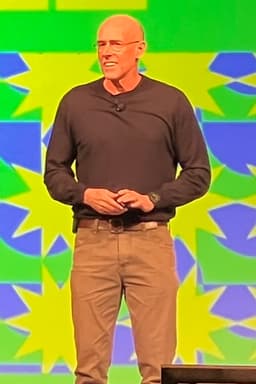
Scott Galloway is a professor of marketing at NYU Stern School of Business, a serial entrepreneur, and a public commentator on technology, media, and economics. He founded and sold several companies including the retail analytics firm L2, which was acquired by Gartner. He hosts the Prof G Pod, publishes the No Mercy / No Malice newsletter, and co-hosts the Pivot podcast with Kara Swisher. He has authored several books including "The Four," which analyzed Amazon, Apple, Facebook, and Google's market dominance.
His commentary is characterized by directness and willingness to make specific public predictions about companies and market dynamics. He has been an outspoken advocate for antitrust action against major technology companies, arguing that their market power has become anti-competitive. He has also written and spoken about higher education economics, wealth inequality, and what he describes as a crisis facing young men economically and socially. These positions place him in contested policy terrain, and critics — including some economists and technology industry figures — have challenged both his empirical claims and his policy prescriptions.
His predictions and market assessments have a mixed track record. Some forecasts have proven accurate; others have been widely off. His commentary occasionally features confident predictions stated as near-certainties that subsequently did not materialize, which critics have noted as a pattern. His newsletter and podcast audience tends to appreciate his opinionated style even when specific predictions miss, treating his commentary as analysis of dynamics rather than precise forecasting.
Galloway's business background provides context for his analysis of corporate strategy and market structure. His positions are generally center-left on economic policy and skeptical of Silicon Valley's framing of its own activities. He has been willing to criticize figures across the political spectrum and in both traditional media and tech, which has produced criticism from multiple directions. His influence on public and policy discussions about technology antitrust has been notable given his ability to communicate complex regulatory arguments to general audiences.